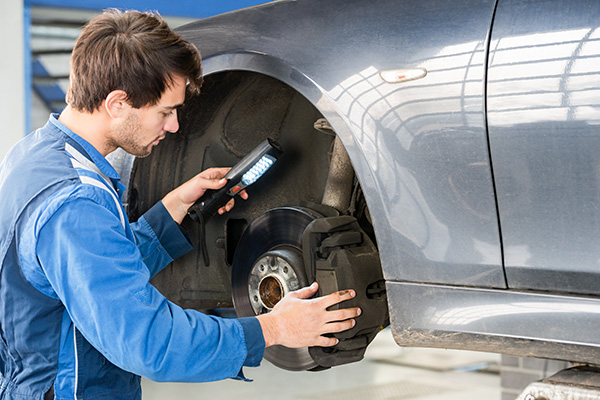
Brake noise is one of those things drivers hope will “go away on its own.” Maybe it squeals a little in the morning, or you hear a faint grind backing out of the driveway, and you figure you can deal with it later. The problem is that many of those sounds are your brakes trying to warn you that you are running out of time. Once you know which noises are serious, you can decide quickly when it is time to get the car in.
Why Brake Noises Deserve Your Attention
Brakes work by turning motion into heat. Pads clamp against rotors, hardware moves in and out of tight spots, and every piece is designed to do that quietly when it is in good shape. New noises usually mean something is worn, out of place, or getting hot where it should not.
Our technicians see the same pattern over and over. A driver hears a new sound, lives with it for a few weeks, and by the time the car comes into the bay, the pads are gone, or the rotors are badly damaged. Catching it at the “new noise” stage almost always costs less than waiting until you hear metal.
High-Pitched Squeal That Stops When You Brake
One of the easiest sounds to recognize is a light, high-pitched squeal that goes away as soon as you touch the brake pedal. Many pads have small metal wear indicators that scrape the rotor when the pad material gets low. That is by design, so you get an audible warning before the friction material is completely gone.
If this is what you are hearing, the car usually still stops normally and there is no vibration in the pedal yet. That is your chance to schedule a brake check while there is still pad left, and the rotors may be reusable. Ignoring that built-in warning is how you end up hearing the next, harsher sound on this list.
Constant Squealing Or Chirping At Any Speed
A squeal or chirp that stays with you while driving, and sometimes even gets louder when you lightly apply the brakes, can point to glazing or contamination. Pads and rotors can develop hard, shiny spots when they have been overheated. Rust buildup on rotor faces after sitting can add to the noise too.
Sometimes the sound comes from hardware that is dry or stuck instead of moving freely. We have seen cars arrive with new pads installed but old, neglected hardware, and they squeal constantly. In those cases, cleaning, proper lubrication, and addressing rotor condition are just as important as the pad material itself.
Grinding That Sounds Like Metal On Metal
Grinding is the one sound you never want to ignore. A deep, rough noise when braking almost always means the pad friction material is gone and the metal backing plate is contacting the rotor. At that point, every stop is machining grooves into the rotor surface.
Driving like this does more than make noise. It reduces braking power, increases stopping distance, and builds a lot of extra heat. That heat can crack or warp rotors and even overheat wheel bearings in extreme cases. When we hear grinding on a test drive, we treat it as an immediate safety concern, not something to “monitor for a while.”
Clicks, Clunks, Or Knocks When You Hit The Pedal
Not all brake trouble sounds like a steady squeal. Some issues show up as sharp noises right when you start or stop braking. Common sources include:
- Loose or worn pad hardware letting pads shift in the caliper
- Calipers that are not sliding smoothly on their guide pins
- Worn suspension or steering components that move when weight shifts forward
A single light click from floating calipers can be normal on some designs. A heavy clunk you can feel in the pedal or steering wheel is a different story. Our technicians usually road test and then inspect mounts, bushings, and brake hardware together, because those systems all interact when you step on the pedal.
Vibration, Pulsing, Or Groaning Underfoot
If the steering wheel shakes or the pedal pulses when you brake, especially at higher speeds, the rotors may be warped, uneven, or covered in rust patches. Instead of a smooth, flat surface, the pads are grabbing high and low spots as the rotor turns. That can make the whole front of the car feel like it is shuddering during a stop.
Groaning or moaning noises often show up at low speeds, such as creeping in a parking lot or stopping at the last few feet of a light. This can point to moisture, surface rust, or pad material that is not happy with the rotor finish. Sometimes a light, temporary film of rust will clear with normal driving, but if the feeling and sound never go away, it is time for a closer look.
Get Brake Repair in Yakima, WA, with Westside Car Care
If your brakes have started squealing, grinding, clicking, or vibrating, they are telling you something has changed, and it will not fix itself. We can road test your vehicle, inspect pads, rotors, hardware, and hydraulics, and show you exactly what needs attention before it turns into a bigger problem.
Schedule brake repair in Yakima, WA, with Westside Car Care, and we will help keep every stop quiet, confident, and safe.